
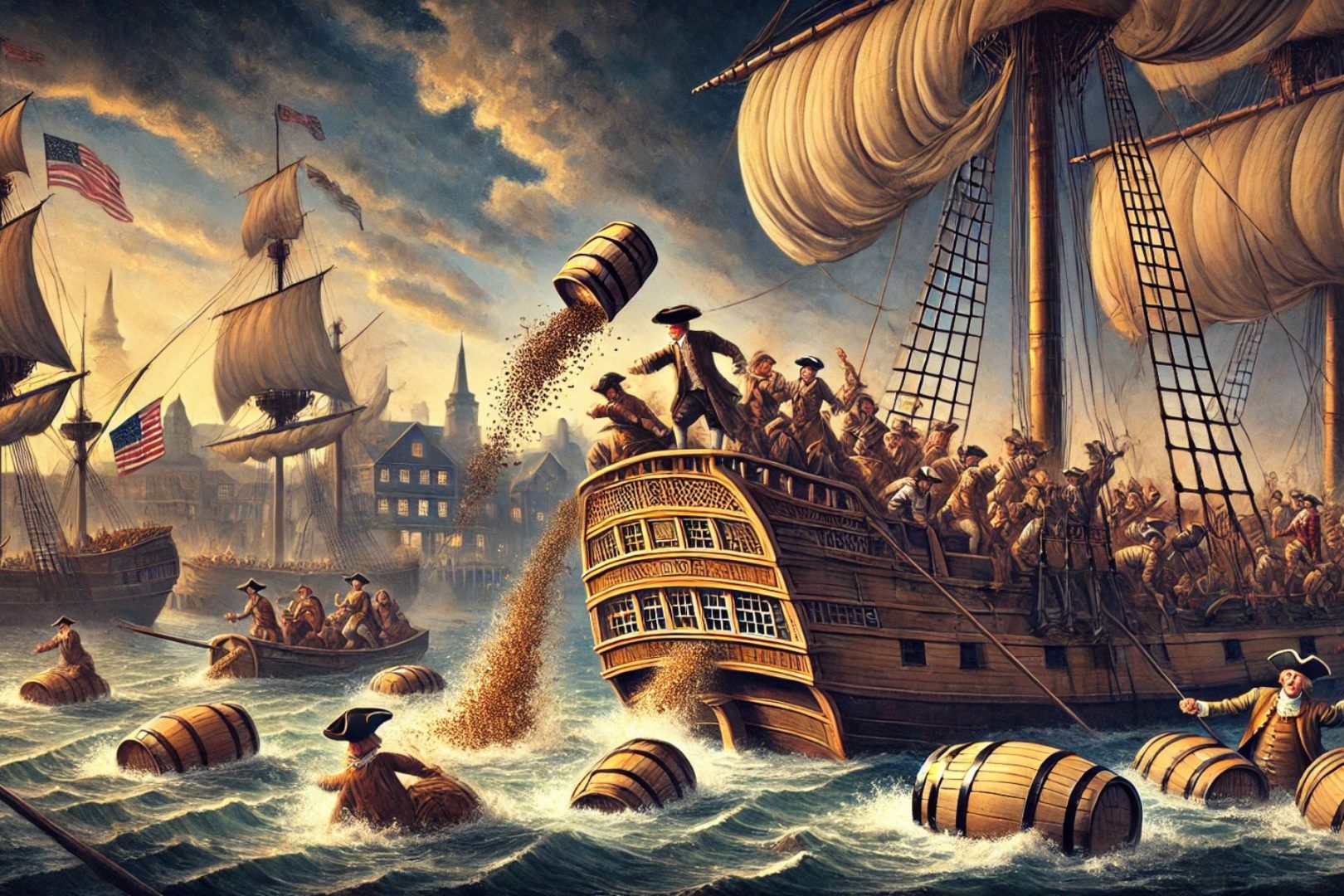

On December 16, 1773, American colonists dumped 342 chests of British East India Company tea into Boston Harbor. This act of defiance against ‘taxation without representation’ became one of the most pivotal moments in world history.
Tea has not only been a beloved beverage for centuries — it has been a catalyst for revolution, a driver of global trade, and a symbol of cultural identity. Perhaps no event illustrates tea’s geopolitical power more dramatically than the Boston Tea Party of 1773.
The Roots of Revolution
By the mid-18th century, tea had become the most popular beverage in the American colonies. The British East India Company held a monopoly on tea trade, and the British Parliament imposed taxes on tea imports to the colonies through the Townshend Acts of 1767 and later the Tea Act of 1773.
The colonists’ frustration was not merely about the cost of tea — it was about the principle of ‘taxation without representation.’ The American colonies had no voice in the British Parliament, yet they were subject to its taxes.
The Night That Changed Everything
On the evening of December 16, 1773, a group of colonists — many disguised as Mohawk Indians — boarded three ships in Boston Harbor: the Dartmouth, the Eleanor, and the Beaver. Over the course of three hours, they dumped 342 chests of tea, worth an estimated £10,000, into the harbor waters.
The Ripple Effect
The British Parliament responded with the Coercive Acts, which closed Boston Harbor, revoked Massachusetts’ charter of self-government, and quartered British troops in colonial homes. These punitive measures only strengthened colonial unity and resistance.
The Boston Tea Party directly contributed to the convening of the First Continental Congress in 1774 and ultimately to the American Revolution and the Declaration of Independence in 1776.
Tea’s Ongoing Legacy
Today, tea continues to be a powerful cultural and economic force. Kenya, the world’s largest exporter of black tea, plays a central role in global tea trade. At Summer Tea, we’re proud to be part of this rich legacy.